Long winters and seasonal routines
People in places such as Michigan, Minnesota, New York, and Chicago often think about vitamin D differently during darker winter months and indoor-heavy seasons.

Learn how your VDR gene may relate to vitamin D signaling, mineral metabolism, immune-related pathways, and broader methylation conversations through an at-home DNA testing option available across the US.

Start with the focused Vitamin D Metabolism Test if your main interest is VDR. Choose the broader DNA Methylation Test if you want more gene context.
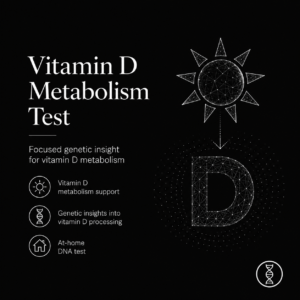

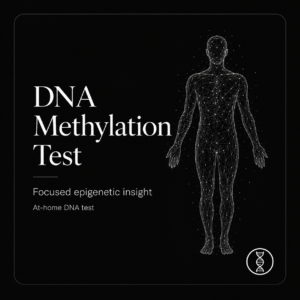

VDR stands for vitamin D receptor. This gene provides instructions related to how cells respond to active vitamin D signaling.
For broader education, review our guide to understanding methylation or compare available products on the test cost and pricing page.
Vitamin D conversations are highly local. Sun exposure, work patterns, climate, housing, commute habits, and seasonality can look very different depending on where someone lives.
People in places such as Michigan, Minnesota, New York, and Chicago often think about vitamin D differently during darker winter months and indoor-heavy seasons.
People in California, Arizona, Florida, Texas, and Nevada may have more sun exposure, but indoor work, heat avoidance, sunscreen use, and lifestyle still vary widely.
At-home collection can be helpful when the closest specialty provider, functional medicine clinic, or genetics-informed practitioner is not nearby.
VDR is not usually viewed as a methylation gene in isolation. Instead, it is often reviewed as part of a broader nutrient metabolism and gene-regulation picture.
Learn more about related wellness education on our health benefits page or review common process questions in the FAQ section.

Many people search locally because they want practical answers before ordering. This page helps connect VDR genetic testing with real US lifestyle, weather, and healthcare-access differences.
This page is relevant if you want genetic context connected with VDR and vitamin D signaling, not a general supplement recommendation.
VDR may be easier to understand when reviewed beside genes such as MTHFR, COMT, MTR, MTRR, AHCY, MTHFD1, and SHMT1.
A VDR genetic test does not measure current vitamin D status. Ask a healthcare professional about serum 25-hydroxyvitamin D testing if that is your goal.
The process is designed for remote access, helping customers order, collect, return, and review results without arranging an in-person collection visit.
Choose a focused Vitamin D Metabolism Test or a broader DNA Methylation Test depending on your goal.
Use the included instructions to complete your at-home sample collection and return the sample for processing.
Use your result to understand inherited VDR-related context and prepare better questions for a qualified healthcare professional.
VDR is only one part of the larger methylation and nutrient-metabolism picture. A broader report can help place vitamin D signaling beside folate, B12, homocysteine, and detoxification-related pathways.

VDR genetic testing can provide helpful inherited context, but it should not be used as a shortcut for diagnosis, supplement dosing, or replacing lab work.
To understand how this test compares with other options, visit our competitive comparison page.
Whether you are in a dense city, a northern winter climate, a hot desert market, a humid southern state, or a rural community, the at-home model helps make VDR testing easier to access.
Browse state and city pages to connect this gene-specific topic with your local search intent, shipping expectations, and testing-access questions.
Strong genetic testing content should explain both the value and the limits of the result. That is especially important for VDR because people often confuse genetic insight with current vitamin D blood status.
Continue learning through our blog, methylation guide, and medical disclaimer.

These answers are written for people comparing at-home VDR and vitamin D metabolism testing options across the United States.
It can show whether selected VDR gene variants are present in your DNA. This provides inherited context related to vitamin D receptor signaling, not a current vitamin D blood level.
No. A VDR genetic result does not diagnose vitamin D deficiency and does not measure serum 25-hydroxyvitamin D. Ask a qualified healthcare professional about lab testing if you need current vitamin D status.
Yes. The at-home testing model is designed for access across the United States, so customers can order online instead of looking for a nearby collection clinic.
Do not change supplements, medication, prenatal care, or medical treatment based only on a VDR result. Review your report with a qualified healthcare professional who can consider your full history and lab results.
Many people also review MTHFR C677T, MTHFR A1298C, MTR, MTRR, COMT, AHCY, MTHFD1, and SHMT1 because methylation and nutrient metabolism involve more than one gene.
Get clearer insight into your VDR gene and use your results to support better-informed conversations about vitamin D metabolism, methylation pathways, and related wellness questions.
Educational genetic testing only. Not intended to diagnose, treat, cure, or prevent disease.